
Digital Superposition
DecaQ is a Quantum Compute architecture designed to deliver quantum computational behavior through deterministic geometric execution on classical hardware
The path is the identity
DecaQuasar is presented as a computational structure whose identity is defined at the level of computational behavior. The system is characterized by a lawful pathway from input to evolved state to output, rather than by a single mandatory material substrate. In that framing, digital, photonic, plasmonic, quantum-dot, spintronic, or hybrid embodiments may be viewed as distinct carriers of the same higher computational structure
Not a quantum-state tensor simulation or approximation. But a deterministic quantum computation engine
Disclosure boundary
The structure can be described at a formal level without revealing the protected means by which a given embodiment produces that behavior
Substrate independence
The same computational pathway may, in principle, be realized across more than one substrate while preserving functional correspondence under a common external test
Computational identity
The public-facing identity of DecaQuasar is behavioral. What is observed is a defined computational route, not a disclosure of internal implementation
The Quantum Computational Pathway
SPIN
A fundamental property of qubits with two opposite orientations
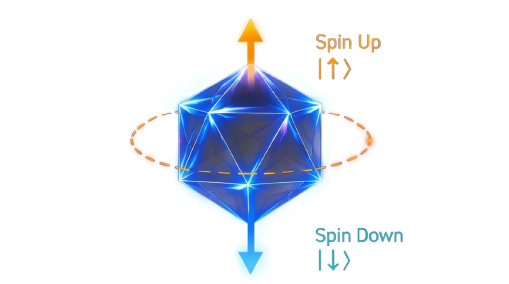
Spin is the intrinsic angular momentum of a qubit,
the basis for many quantum computing operations
The quantum “up” or “down” of information
AMPLITUDE
The probability of each outcome is encoded in amplitude
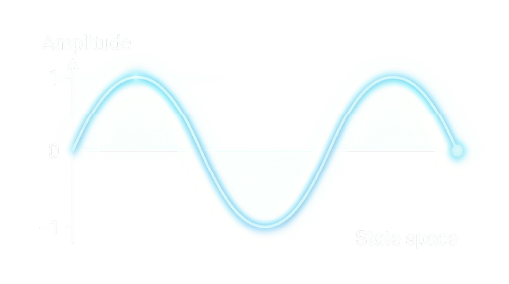
The amplitude determines
the probability of measuring a particular state
Probability = |Amplitude|²
ENTANGLEMENT
Qubits become connected and share the same fate
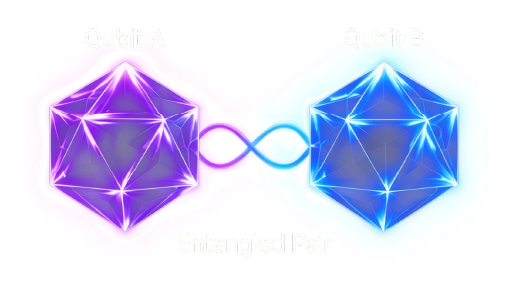
Measuring one qubit instantly determines the state of its entangled partner – no matter the distance
Stronger correlations than classical physics allows
SUPERPOSITION
A qubit can be in many states at the same time
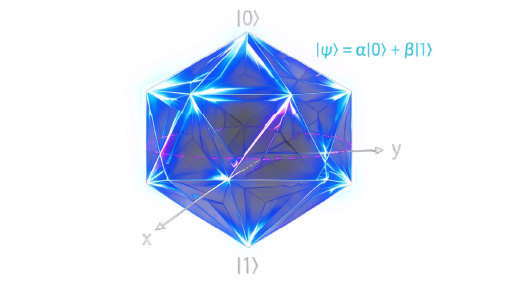
Unlike classical bits (0 or 1),
a qubit exists in a combination of both states until it is measured
All possible states exist simultaneously
TOGETHER: THE POWER OF QUANTUM INFORMATION
DecaQ leverages all four quantum principles to deliver deterministic, quantum-class performance – without physical qubits.
The founders team
Tamir Feldman
Miki Lumnitz
Gal Rotem
Ready to Learn More?